
| Peter Clark West End, SO30 | 07867 557964 | 02038 1942220 |
| Simon Clark West End, SO30 | 07977 090256 | |
| Louise Evans Botley, SO30 | 07434 952900 | |
| Gemma Hare Hedge End | 07715 284186 | |
| Richard Read Fair Oak, SO50 | 07485 407963 | |
| Lisa Rooke Shedfield | 07514 330624 | |
| Peter Tomlin Hedge End, SO30 | 07777 664641 | |
| Simon Fitzjohn Southampton SO14 | 07496 156157 |
If you are reading this page in other parts of England, you can find a local swarm collector using this map. British Beekeepers’ Association swarm map
When you call, the beekeeper will ask you a few questions:
Have the bees settled into a cohesive ball?
After a while, the swarm will settle down into a relatively still ball of bees; maybe about the size of a rugby ball or watermelon but it could be bigger than that.
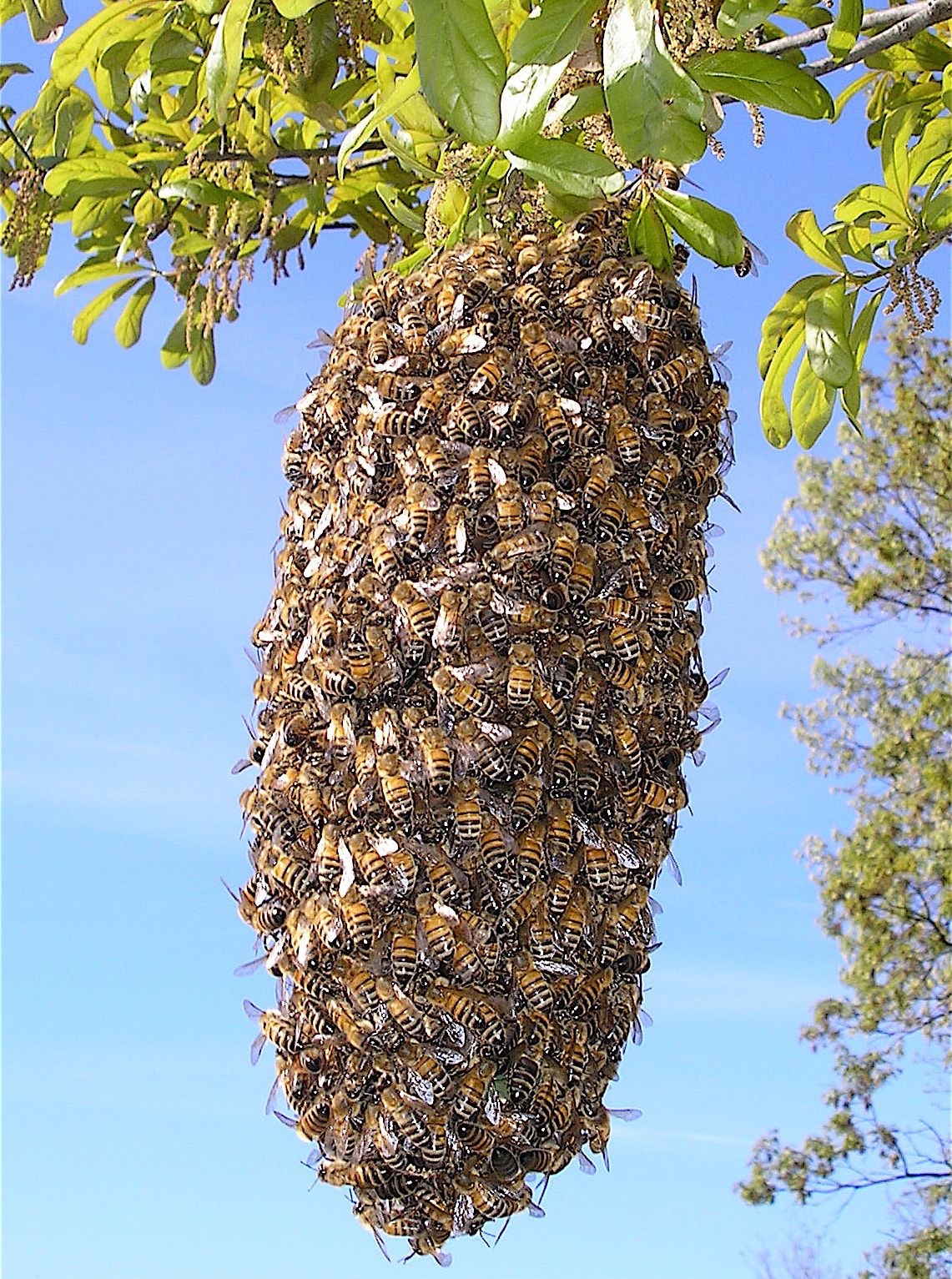


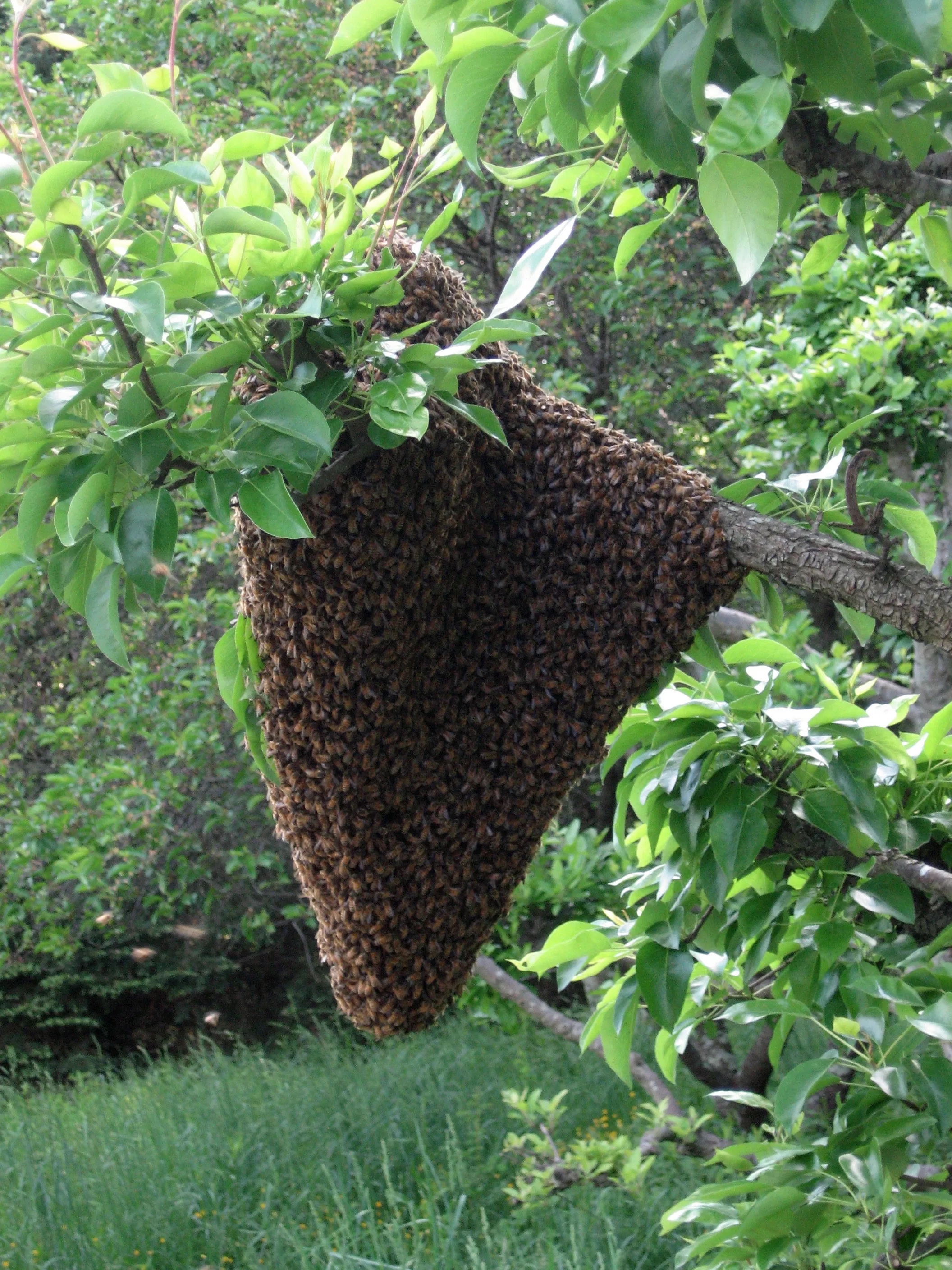


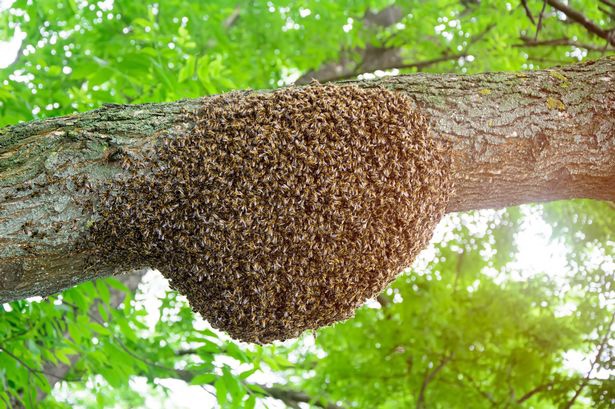
Does the swarm look like these pictures?
We’re sorry but we can only deal with honey bee swarms. We cannot remove wasps’ nests, hornets or bumble bees.
Is the swarm accessible?
Sometimes the bees settle on a low branch or fence and are easy to collect. They may settle in a tree or guttering and the beekeeper will need to discuss access with you.
How long has the swarm been there?
Do you mind us trimming your hedge or tree?
Strange question you may think! It’s not that we’re popping round to do the gardening but sometimes bees settle in foliage and the only way to remove them is to cut leaves and branches from shrubs or trees.
Have you got the kettle on?
Depending on what stage the swarm is at, the beekeeper may be at your house for sometime. We must allow all the bees that are due to join the swarm to do so, or you’ll be left with a group of demoralised, homeless bees. If you’d like to know more about swarming and why bees do it, click here.
 Meridian Beekeepers’ Association
Thanks loads! Peter came and gave our swarm a lovely new home!
LikeLike