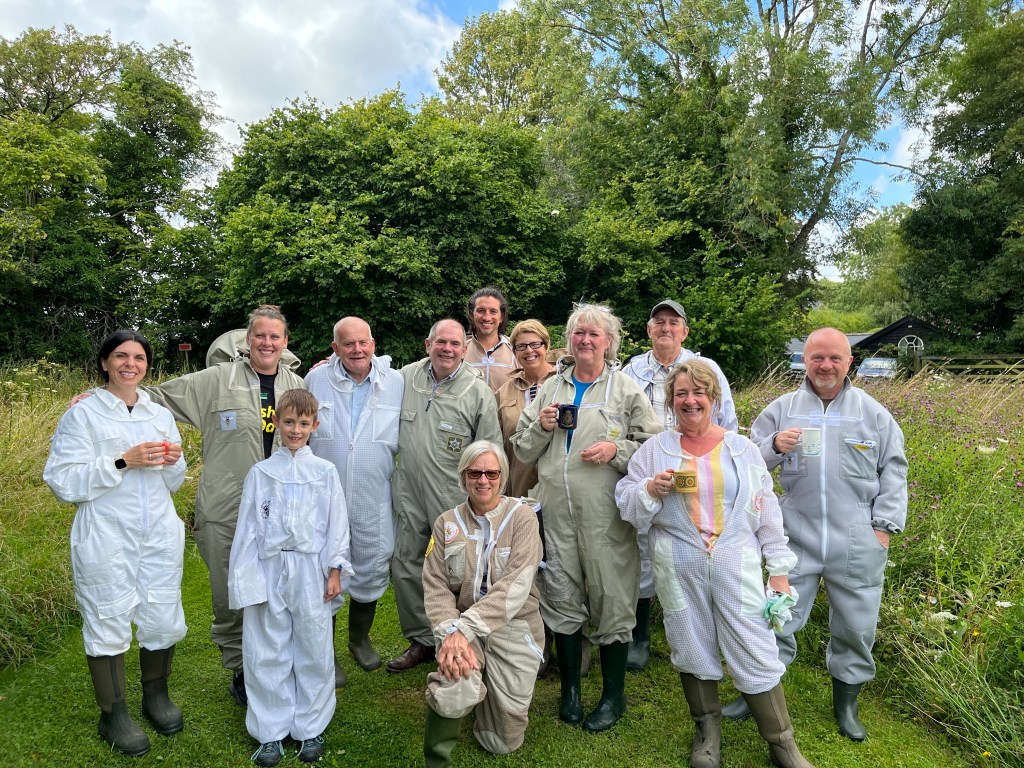
It seemed touch-and-go for the meeting earlier in the day as the skies were threatening rain. There was however a break in the weather, the sun came out intermittently between the clouds and the temperature was a comfortable 22c. Despite a few drops of rain during the inspections, the bees were remarkably patient with us and we all enjoyed a peaceful and informative meeting.
The four colonies at Swanmore are doing much better now although sadly, it continues to be necessary to put feed on one of the hives due to the continuing wet weather.
There were several new members at the meeting and Louise and Denise were able to demonstrate how to make a disease inspection. We were able to see brood at all stages including eggs; one of the most important things to be able to spot in a hive. Queens were seen in all colonies (both marked and unmarked) and Denise demonstrated the weight of a brood frame entirely filled with capped honey.
An average honeybee colony requires about 20 kg of winter stores. A British Standard brood frame (like the one seen the video), when full of honey, contains about 2.5kg. A 14×12 frame contains about 3.75kg and a super frame holds approximately 1kg. Your bees need the equivalent of 8 (or 6, if 14×12) brood frames of honey to see them through winter.
Louise was able to point out the viral disease Sacbrood in one of the hives.
This particular colony was slightly more heavily infected earlier in the season but as they have a reasonably strong queen, the infection is not currently considered to be problematic. We did however find this:
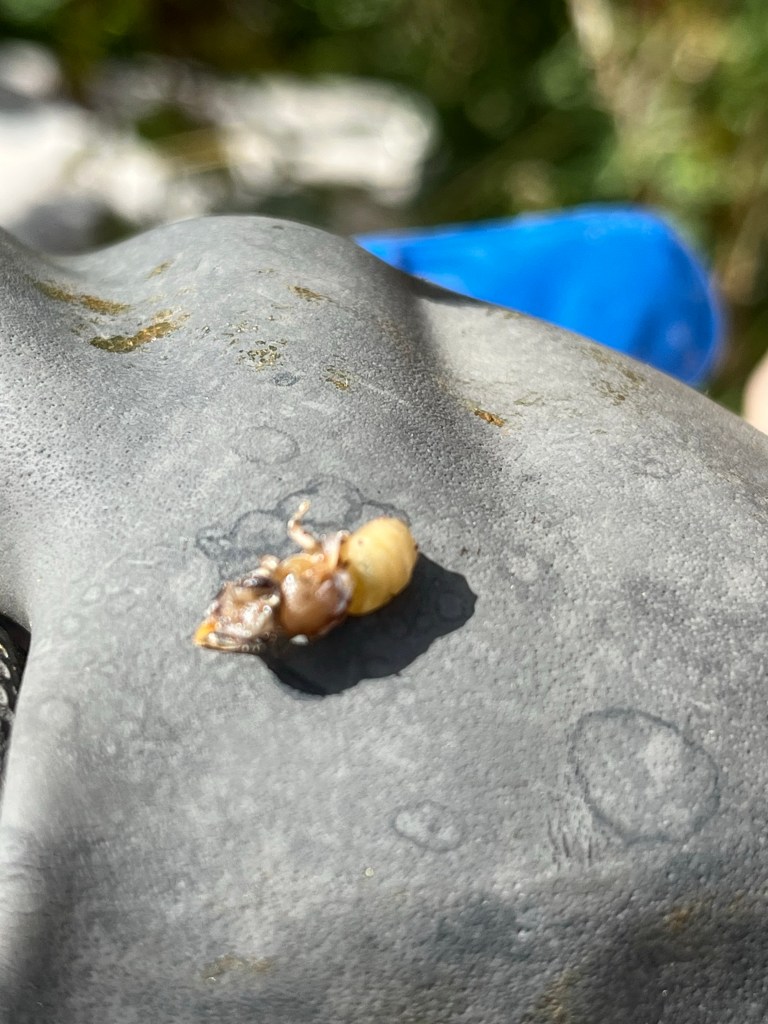
This was one of the lava we suspected as being infected with sacbrood but as none of us had seen such a well developed lava with sacbrood before, we sent this image to the National Bee Unit for a second opinion. The NBU is a resource for UK beekeepers and they welcome similar enquiries from all beekeepers regardless of experience. NBU, sacbrood .
Louise took the opportunity to describe the process for rendering wax and demonstrated sugar dusting which should be used as part of an integrated programme of varroa control.
All in-all, we enjoyed a successful afternoon of beekeeping, the colonies at Swanmore are doing better and some interesting situations were encountered and explained. We hope you took away something useful from the meeting and look forward to seeing again at our next meeting.

 Meridian Beekeepers’ Association