

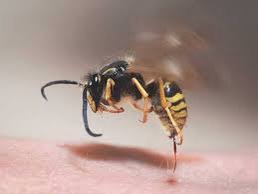

The reason for asking this question is usually related to the treatment of a bee or wasp sting.
You may have heard the old adage: ‘bee stings are acidic so treat them with baking soda (alkaline) but wasp stings are alkaline so treat them with vinegar which is an acid.’
But can baking soda really neutralize a bee sting? Will rubbing vinegar on a wasp sting actually help?
The pH values of bee stings and wasp stings
Acidity or alkalinity is measured on the pH scale; pH stands for power of Hydrogen. The scale goes from 0 (highly acidic – for example battery acid) to 14 which is highly alkaline, e.g. liquid drain cleaner which has a pH of 14.
Here is a list of pH values of some common substances with a comparison of where bee and wasp venom sit within the scale:
Acidic
1 Battery Acid
2 Gastric acid, lemon juice, vinegar
3 Hydrochloric acid
4 Tomato juice, beer
4.5-5.5 Bee venom, acid rain
6 Black coffee, saliva, milk, urine
6.8 – 6.9 Wasp venom
7 Neutral, pure water, blood
8 Sea water, toothpaste, hand soap
9 Baking soda, eggs
10 Milk of Magnesia
11 Ammonia
12 Soapy water
13 Bleach, oven cleaner
14 Drain cleaner, caustic soda
Alkaline
Bee venom has a pH value of between 4.5 and 5.5 which makes it acidic, although not highly acidic; it’s only slightly more acidic than milk and human saliva. Wasp venom is close to neutral; pH 6.8 so not as alkaline as many people think!
There’s quite a lot of advice around the web and elsewhere supporting the use of baking soda on bee stings and vinegar on wasp stings but do these remedies work?
As bee stings are only mildly acidic and wasp stings are more or less neutral and both are injected into the skin not onto it, a topical application of baking soda or vinegar is probably unlikely to neutralise the venom.
The stings cause pain and swelling by damaging cells and neurons thus sending pain signals to the brain. Theories that dealing with pain by ‘neutralizing’ the venom therefore seem overly simplistic. There are however hundreds of testimonies from members of the public suggesting that some relief from wasp stings was gained from vinegar, so maybe it’s worth a try?
Recognised treatments for bee and wasp stings
Bee stings can be painful and can lead to other problems such as inflammation or allergic reactions (sometimes severe allergic reaction, see Anaphylaxis), but there are some things that you can do to alleviate the symptoms caused by bee stings.
• Ice to reduce swelling and inflammation
The ice will also reduce blood flow near the sting thereby reducing the flow of venom to the rest of the body. As a precaution, do not put ice directly onto skin, as this can lead to ice burns, particularly in those with sensitive skin. Instead, wrap the ice in a cloth before applying to the skin or use a bag of frozen peas.
• Antihistamine spray or cream
This will help reduce inflammation and prevent any local allergic reaction. Be sure antihistamines are appropriate before administering.
• Remove the stinger if from a honey bee
Honey bee stingers will usually remain in the skin and should be removed as soon as possible. The stinger continues to pump venom after the bee has left (she will die after stinging); if it is removed quickly, there will be less pain and swelling.
Summary
Bee stings are mildly acidic and wasp stings are close to neutral. The mildly acidic nature of bee stings suggests that applying baking soda is unlikely to have any significant benefit. However, there are things you can do to reduce the symptoms. There is strong circumstantial evidence that applying vinegar to a wasp sting does help.
 Meridian Beekeepers’ Association
Bee stings should be scrapped out from under the sting – not pulled otherwise you run the risk of leaving the poison sac behind
LikeLike